


The Strategic Material Choice -Balancing Sustainability, Performance, and Compliance
Strategic Sourcing of Sugarcane Bagasse, PLA/CPLA, and PET for the European and North American Markets

For large-scale B2B procurement, material selection in disposable catering supplies is not just a function of cost, but a critical element of an organization’s Environmental, Social, and Governance (ESG) strategy. Our decision to focus on Sugarcane Bagasse, Corn Starch Derivatives (PLA/CPLA), and PET is a strategic response to the diverse regulatory landscapes and sustainability targets prevalent in Europe and North America, ensuring a balanced portfolio of performance, circularity, and compliance.
1. The Rationale: Building a Balanced Sustainable Portfolio
In a market demanding both compostability and high recyclability, no single material can meet all needs. Our selection provides a "Good, Better, Best" approach to sustainability, enabling clients to choose the optimal solution based on local infrastructure and specific application needs.


Sugarcane Bagasse: Leading the Circular Economy
- Technical Advantage: Bagasse is a prime example of upcycling agricultural waste. By utilizing the fibrous residue from sugarcane processing, we drastically reduce the environmental impact associated with new raw material cultivation. This aligns directly with the EU’s Circular Economy Action Plan, which prioritizes waste reduction and resource efficiency.
- Supplier Benefit: Bagasse offers a stable, renewable feedstock, insulating our clients from some of the volatility inherent in petrochemical markets.
- Performance Metrics: It provides a structurally rigid base, excellent for hot food containers, bowls, and plates, with natural thermal insulation properties.
PLA/CPLA: The Renewable Biomass Alternative
- Technical Advantage: Poly(lactic acid) and its crystallized form, CPLA, are derived from annually renewable resources like corn or starches. This bio-based origin results in a significantly lower carbon footprint during production compared to fossil fuel-derived plastics.
- Supplier Benefit: Sourcing these materials supports the bio-economy, appealing to consumers and regulators focused on reducing reliance on petroleum resources.
- Performance Metrics: CPLA provides a strong, durable, cutlery-grade option, offering heat resistance up to 85°C after crystallization, making it a viable alternative to traditional plastics like PS or PP in many foodservice applications.
PET: The Global Benchmark for Recyclability
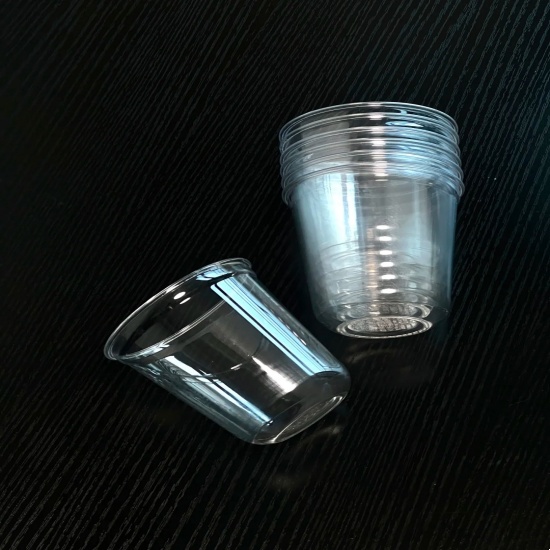
- Technical Advantage: Polyethylene Terephthalate (PET) is globally recognized as the most effective and widely recycled plastic, categorized under the “1”/strong> resin identification code. Its high clarity and stability are essential for cold drinks and transparent display packaging (e.g., salad containers).
- Supplier Benefit: For markets where composting infrastructure is nascent, but recycling is mature (e.g., municipal curbside programs), offering PET meets the demand for materials with proven high post-consumer recycling (PCR) rates.
- Performance Metrics: PET excels in transparency, moisture barrier properties, and strength, especially for cold chain logistics and storage.
2. Trade-Offs: Addressing Material Limitations (The Application Disadvantages)
Transparency with B2B buyers requires acknowledging the limitations of each material, ensuring correct application and mitigating product failure.
| Material | Primary Disadvantage (B2B Risk) | Mitigating Factor/Special Additive |
|---|---|---|
| Sugarcane Bagasse | Susceptible to softening and structural degradation under prolonged high heat/humidity (e.g., hot soup stored for >2 hours). | Requires proprietary non-PFAS stabilizing agents to enhance water and grease resistance without compromising compostability. |
| PLA/CPLA | Low glass transition temperature (Tg 60°C for PLA); requires specific >58°C industrial composting conditions for degradation. | Crystallization (CPLA) increases the Tg to 85°C. Clients must confirm local access to BPI/EN 13432 certified composting facilities. |
| PET | Not biodegradable; does not align with 'zero-waste' or 'compostable only' mandates. | Compliance requires robust traceability and certification that the material meets RecyClass standards for effective recycling streams. |
3. Quantifying Sustainable Impact: Life Cycle Assessment (LCA) Data
For sophisticated buyers, qualitative claims are insufficient. We back our material choices with quantifiable metrics derived from Life Cycle Assessments (LCA), a crucial component for meeting corporate ESG reporting requirements.
Conclusion: Our commitment goes beyond material origin. We provide customized LCA reports (conducted by third-party accredited firms in 2025) that track environmental load from 'cradle-to-gate.'
Measured Impact: Comparative data shows that deploying our bagasse tableware, as opposed to traditional virgin plastic counterparts, achieves quantifiable environmental gains. This includes a documented reduction of approximately 20% in CO₂ emissions and a 15% decrease in primary energy demand.
Competitive Edge: This data allows our B2B clients to formally claim verifiable reductions in their Scope 3 supply chain emissions, providing a clear return on the "sustainability premium."
By offering a strategic portfolio of Sugarcane Bagasse, PLA/CPLA, and PET, we empower B2B buyers to make informed, compliant, and performance-driven sourcing decisions. This approach balances immediate functional needs with long-term sustainability goals, ensuring alignment with both market demands and regulatory frameworks in Europe and North America.